
The digital marketing world is changing rapidly. Traditional search engine optimization is no longer the only strategy businesses need. Today, search engines, AI assistants, and generative platforms are transforming how users discover information online.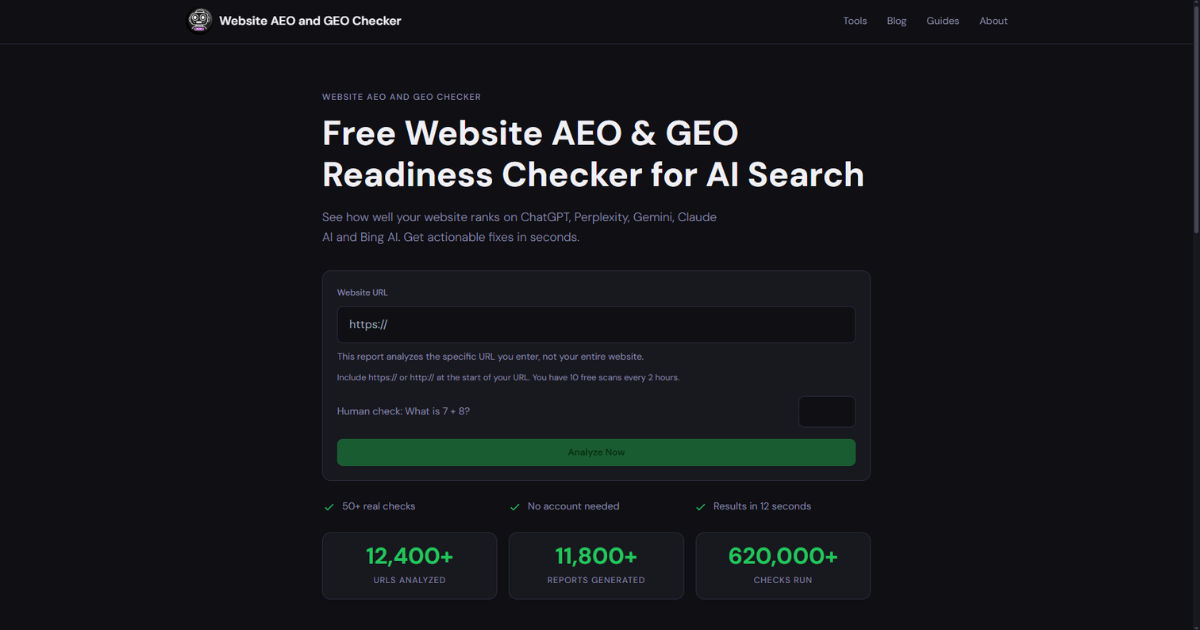
This is where “Website AEO and GEO Checker” becomes important for website owners, marketers, and businesses that want to stay ahead.Many beginners often confuse SEO with AEO. While both aim to improve online visibility, they work in different ways.
SEO focuses on ranking webpages in search engines like Google and Bing. AEO focuses on optimizing content so AI assistants and answer engines can directly provide answers to users.
Understanding the difference between SEO and AEO is now essential. Search behavior is changing because people are asking conversational questions through voice search and AI chat systems. Businesses using “Website AEO and GEO Checker” tools can better prepare their websites for the future of digital search.
This guide explains everything beginners need to know about how website AEO differs from SEO, why both matter, and how businesses can combine them for stronger online visibility.
SEO
SEO stands for Search Engine Optimization. It is the process of improving a website so it ranks higher in search engine results pages.
The main goal of SEO is to increase organic traffic. Businesses optimize their websites to appear when users search for keywords related to their products, services, or information.
SEO includes many strategies such as:
- Keyword optimization
- Content creation
- Backlink building
- Technical SEO
- Mobile optimization
- Page speed improvement
- User experience enhancement
For example, if someone searches “best running shoes,” search engines display webpages they consider most relevant and trustworthy.
SEO has been the foundation of digital marketing for many years. However, the rise of AI search systems is changing how users consume information online.
Understanding AEO
AEO stands for Answer Engine Optimization. It focuses on optimizing content so AI systems and answer engines can directly provide answers to user questions.
Instead of simply ranking webpages, AEO aims to make content understandable for AI-driven platforms.
These platforms include:
- AI chat assistants
- Voice search tools
- Smart speakers
- Generative AI systems
- Featured snippets
- Conversational search platforms
AEO helps websites become trusted sources for direct answers.
For example, when a user asks:
“What is the difference between SEO and AEO?”
An AI assistant may summarize information from multiple trusted websites and provide a direct response.
Websites optimized with “Website AEO and GEO Checker” strategies are more likely to become trusted answer sources.
The Evolution of Search Behavior
Search behavior has changed dramatically over the years.
Traditional Search
In the past, users typed short keywords such as:
- “best smartphones”
- “SEO guide”
- “cheap hotels”
Search engines displayed lists of links.
Users clicked websites to find answers.
Modern Search
Today, users ask complete questions like:
- “What is the best smartphone for photography?”
- “How does SEO help small businesses?”
- “Which hotels near me offer free breakfast?”
AI systems now provide direct answers instead of just showing links.
This shift is one of the main reasons AEO has become important.
Businesses using “Website AEO and GEO Checker” techniques can improve their visibility in conversational search environments.
Core Difference Between SEO and AEO
The main difference between SEO and AEO is their primary goal.
SEO Goal
SEO aims to rank webpages higher in search engine results.
AEO Goal
AEO aims to provide direct answers through AI systems and answer engines.
SEO focuses on search visibility.
AEO focuses on answer visibility.
Both strategies overlap, but they serve different purposes.
How SEO Works
SEO works by helping search engines understand webpages.
Search engine bots crawl websites and evaluate factors such as:
- Keywords
- Content quality
- Backlinks
- User experience
- Site structure
- Technical performance
Search engines then rank pages based on relevance and authority.
The higher the ranking, the more traffic a webpage can receive.
SEO mainly depends on clicks.
Users still visit the website to get information.
How AEO Works
AEO works differently.
Instead of focusing only on rankings, AEO helps AI systems extract useful answers directly from content.
AI systems analyze:
- Structured data
- Conversational content
- FAQ sections
- Clear headings
- Simple explanations
- Entity relevance
- Trust signals
AEO focuses heavily on clarity and context.
AI platforms prefer content that directly answers questions.
This is why many businesses now use “Website AEO and GEO Checker” methods to improve AI visibility.
SEO Focuses on Keywords
Traditional SEO heavily relies on keywords.
Marketers research phrases users type into search engines.
Examples include:
- digital marketing tips
- SEO services
- best laptops
SEO content often targets keyword density and ranking opportunities.
Keyword optimization remains important, but search algorithms now prioritize meaning and intent more than exact matches.
AEO Focuses on User Intent
AEO focuses more on user intent and conversational questions.
Instead of short keywords, AEO content answers natural-language queries such as:
- “How does SEO improve website traffic?”
- “Why is AEO important for AI search?”
- “What is the difference between SEO and AEO?”
AI systems prefer content written naturally and clearly.
This makes AEO more conversational than traditional SEO.
SEO Relies on Rankings
SEO success is often measured by rankings.
Businesses want to appear on:
- The first page of search results
- Top three positions
- Featured snippets
Higher rankings generally mean more traffic.
SEO tools track keyword positions constantly.
AEO Relies on Direct Answers
AEO success depends on whether AI systems select your content as a trusted answer source.
Users may never click the webpage.
Instead, AI assistants summarize the content directly.
This changes how brands measure visibility.
Being cited in AI-generated answers is becoming increasingly valuable.
“Website AEO and GEO Checker” platforms help businesses evaluate this type of visibility.
Technical SEO vs Technical AEO
Technical SEO
Technical SEO includes:
- XML sitemaps
- Fast page speed
- HTTPS security
- Mobile responsiveness
- Crawlability
- Indexing optimization
These elements help search engines access webpages properly.
Technical AEO
Technical AEO includes:
- Structured data markup
- Schema implementation
- Entity recognition
- FAQ formatting
- Semantic organization
- Context optimization
AI systems rely on structured information to understand content accurately.
Content Structure Differences
SEO Content Structure
SEO articles often include:
- Keywords
- Meta descriptions
- Internal links
- Long-form content
- Search-friendly formatting
AEO Content Structure
AEO content emphasizes:
- Question-and-answer format
- Clear summaries
- Short paragraphs
- Conversational writing
- Easy readability
AI systems prefer content that delivers quick and accurate answers.
This is why “Website AEO and GEO Checker” strategies emphasize clarity and semantic organization.
Voice Search and AEO
Voice search has increased significantly with devices like smart speakers and mobile assistants.
Voice searches are more conversational.
Examples include:
- “What is the weather today?”
- “How do I improve SEO?”
- “What is AEO in digital marketing?”
AEO helps websites appear in voice search results.
Traditional SEO alone may not fully optimize content for voice assistants.
The Role of AI in AEO
AI is central to AEO.
Generative AI systems analyze webpages differently than traditional search engines.
AI models focus on:
- Meaning
- Context
- Authority
- Clarity
- Structured knowledge
Websites that provide accurate and organized information are more likely to be referenced.
This is why businesses increasingly use “Website AEO and GEO Checker” tools to evaluate AI readiness.
Featured Snippets and AEO
Featured snippets are one of the earliest forms of answer engine optimization.
These snippets provide direct answers at the top of search results.
Examples include:
- Definitions
- Lists
- Tables
- Quick explanations
Optimizing for featured snippets improves both SEO and AEO performance.
GEO and Its Relationship with AEO
GEO stands for Generative Engine Optimization.
It focuses on optimizing content for AI-generated responses.
While SEO targets search engines and AEO targets answer engines, GEO specifically targets generative AI systems.
Generative AI tools summarize information from multiple sources.
Businesses using “Website AEO and GEO Checker” strategies can improve visibility in AI-generated content.
Why SEO Alone Is No Longer Enough
SEO remains important, but user behavior is evolving.
People increasingly use:
- AI chatbots
- Voice assistants
- Conversational search
- Smart devices
Traditional SEO focuses heavily on webpage rankings.
However, many users now expect instant answers.
AEO helps websites remain visible in this new search environment.
Why Businesses Need Both SEO and AEO
SEO and AEO should work together.
Businesses that combine both strategies gain stronger online visibility.
Benefits of SEO
- Higher website traffic
- Better rankings
- Increased visibility
- More clicks
Benefits of AEO
- AI visibility
- Voice search optimization
- Direct answer placement
- Greater authority recognition
Using “Website AEO and GEO Checker” solutions helps businesses balance both approaches effectively.
Important SEO Metrics
SEO performance is often measured using:
- Organic traffic
- Keyword rankings
- Bounce rate
- Click-through rate
- Backlinks
- Domain authority
These metrics show how well a website performs in traditional search.
Important AEO Metrics
AEO performance may include:
- Featured snippet appearance
- Voice search visibility
- AI citation frequency
- Structured data success
- Answer selection rate
These metrics focus on answer-based visibility.
Content Optimization for SEO
SEO content optimization usually involves:
- Keyword placement
- Title optimization
- Meta tags
- Link building
- Image optimization
- Long-form articles
The goal is to improve ranking potential.
Content Optimization for AEO
AEO content optimization involves:
- Direct question answering
- Conversational language
- FAQ sections
- Structured headings
- Schema markup
- Entity-based content
AI systems prefer organized and easy-to-understand information.
Schema Markup and AEO
Schema markup is very important for AEO.
It helps AI systems understand webpage content.
Common schema types include:
- FAQ schema
- Article schema
- Product schema
- Organization schema
- Review schema
Structured data improves AI comprehension and answer extraction.
The Importance of E-E-A-T
E-E-A-T stands for:
- Experience
- Expertise
- Authoritativeness
- Trustworthiness
Both SEO and AEO rely heavily on these quality signals.
AI systems prefer trustworthy sources.
Search engines also reward credible content.
Businesses using “Website AEO and GEO Checker” approaches should prioritize content accuracy and authority.
SEO and AEO for Local Businesses
Local businesses benefit from both SEO and AEO.
SEO Helps By:
- Improving local rankings
- Increasing map visibility
- Driving website traffic
AEO Helps By:
- Answering local queries
- Improving voice search results
- Supporting AI recommendations
Example:
“Best coffee shop near me”
AI systems may directly recommend businesses with optimized local data.
Mobile Optimization and AEO
Mobile devices dominate internet usage.
Mobile-friendly websites are essential for both SEO and AEO.
Fast-loading pages improve:
- User experience
- Search rankings
- AI accessibility
Responsive design remains critical.
Future of Search
The future of search is increasingly AI-driven.
Search engines are evolving into answer engines.
Users want:
- Faster answers
- Personalized responses
- Conversational experiences
This means AEO and GEO will continue growing in importance.
SEO will still matter, but optimization strategies must evolve.
Common Mistakes Beginners Make
Ignoring User Intent
Many beginners focus only on keywords.
Modern optimization requires understanding user questions and needs.
Overusing Keywords
Keyword stuffing harms readability and trust.
Natural writing performs better.
Ignoring Structured Data
Schema markup helps AI systems understand content more effectively.
Forgetting Conversational Search
Voice and AI searches use natural language.
Content should reflect conversational patterns.
Best Practices for Combining SEO and AEO
Create Helpful Content
Focus on solving real user problems.
Use Conversational Language
Write naturally and clearly.
Add FAQ Sections
Answer common questions directly.
Optimize Technical Performance
Improve speed, security, and mobile responsiveness.
Implement Schema Markup
Help AI systems understand your content.
Build Authority
Publish trustworthy and accurate information.
Monitor AI Visibility
Use “Website AEO and GEO Checker” tools to evaluate optimization performance.
The Role of Content Quality
Content quality is now more important than ever.
Both search engines and AI systems prioritize:
- Accuracy
- Clarity
- Depth
- Readability
- Relevance
Low-quality content struggles to rank or appear in AI-generated answers.
How AI Search Changes Content Strategy
AI search reduces reliance on traditional keyword-heavy pages.
Instead, content should:
- Answer questions directly
- Provide useful insights
- Include context
- Use semantic relationships
- Demonstrate expertise
This creates better user experiences.
Why Beginners Should Learn AEO Early
AEO is becoming essential for modern digital marketing.
Learning AEO early helps businesses prepare for future search trends.
Companies adopting AEO now gain competitive advantages.
As AI search expands, optimized content will become even more valuable.
“Website AEO and GEO Checker” strategies allow beginners to measure readiness for evolving AI systems.
SEO and AEO Are Not Competitors
One common misconception is that AEO will replace SEO completely.
That is not true.
SEO and AEO complement each other.
SEO still drives valuable traffic through search engines.
AEO improves visibility in AI-driven platforms.
Businesses that integrate both strategies will perform best.
Conclusion
The digital search landscape is evolving rapidly. Traditional SEO remains important, but it is no longer enough on its own. AI-powered search systems, voice assistants, and generative platforms are changing how users access information online.
SEO focuses on rankings, clicks, and organic traffic. AEO focuses on direct answers, conversational search, and AI visibility. GEO expands this even further by optimizing for generative AI systems.
Businesses that understand these differences can build stronger online strategies. Combining SEO, AEO, and GEO creates better visibility across both traditional and AI-driven search environments.
Using “Website AEO and GEO Checker” methods helps website owners evaluate whether their content is optimized for the future of search. As AI technology continues to grow, businesses that adapt early will gain a major advantage.
The future belongs to websites that provide accurate, trustworthy, and well-structured information. Whether users search through search engines, voice assistants, or AI chat platforms, quality content will remain the key to success.