
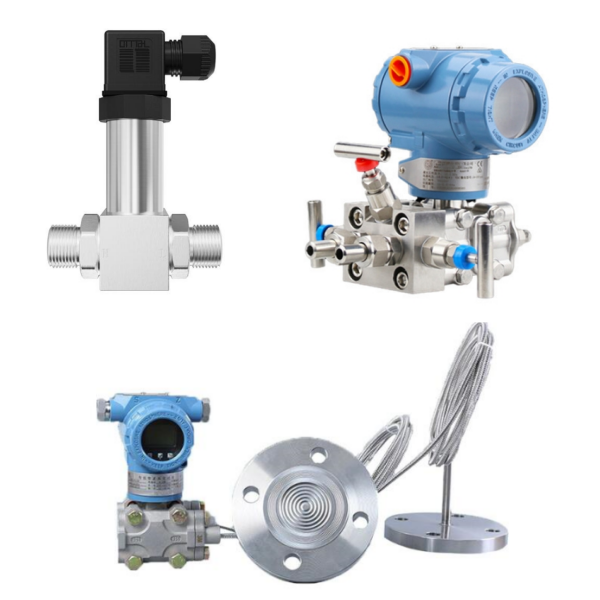
In the vast landscape of industrial measurement technology, ultrasonic liquid level sensors have emerged as reliable options for properly assessing the degrees of different liquids. These sensors operate the principle of ultrasonic waves released from a transducer, which jump off the liquid surface and return to the sensor. The moment considered the waves to travel shows the range to the liquid surface, permitting accurate level measurements. Complementing these sensors are differential pressure (DP) transmitters, which play a vital function in measuring the pressure distinction between 2 factors in a liquid system. By associating this pressure difference with level dimensions, they can successfully compute liquid degrees in vessels and storage tanks, making them crucial in markets such as oil and gas, water treatment, and food handling.
Together with ultrasonic sensors and DP transmitters, inline water flow meters are key parts in monitoring the flow prices of liquids within industrial applications. These devices gauge the volume or mass of liquid moving via a pipe and supply real-time data crucial for process optimization and source monitoring. Magnetic water flow meters are specifically notable for their non-invasive measurement devices.
Industrial pressure transducers are necessary for monitoring and managing procedures involving gases and liquids. They convert pressure measurements into an electrical signal, which can be analyzed and refined by control systems. The convenience of pressure transducers allows their application in varied setups, from producing to environmental protection. Additionally, clamp-on flow meters supply a special non-invasive choice for determining flow prices. These devices attach externally to pipelines, making use of ultrasonic modern technology to determine the rate of liquid flow without conflicting with the system. Their simplicity of setup and portability make them a recommended selection in various applications where downtime needs to be decreased.
Explore dp transmitter the advancement of industrial measurement innovations, from ultrasonic liquid level sensors to innovative flow meters, and uncover just how these technologies boost efficiency and reliability across various sectors.
High-temperature pressure sensors play a critical duty in circumstances where extreme thermal conditions dominate. These sensors are developed to endure elevated temperatures while supplying precise pressure analyses, making them essential in industries such as petrochemicals and power generation. Similarly, submersible hydrostatic level transmitters are developed for underwater applications. These devices are submerged in the liquid being gauged, offering constant level readings based upon the hydrostatic pressure created by the liquid column over the sensor. Guided radar level transmitters, on the various other hand, make use of radar technology to gauge levels in challenging conditions, such as those with vapor or foam. Their capability to penetrate these obstacles makes them optimal for various applications, including chemical storage space and wastewater treatment.
Turbine type flow meters are a well-established innovation for gauging liquid flow prices, particularly in clean fluids. As industries continue to progress, so do the types of pressure sensors used for different applications.
Vacuum pressure transducers, as the name suggests, are utilized for determining low-pressure environments, typically listed below atmospheric pressure. Absolute pressure transducers supply dimensions worrying an excellent vacuum, providing a clear referral factor for pressure readings.
The accuracy and reliability of the instrument should align with the certain needs of the application when it comes to flow measurement devices. Whether using a typical flow meter or much more innovative technology like clamp-on ultrasonic flow meters, choosing the appropriate kind of flow measurement tool can considerably influence functional effectiveness. Markets dealing with harsh fluids may opt for magnetic flow transmitters as they are built without relocating components, thus lowering wear and tear. The variety in flow measurement solutions allows businesses to choose instruments tailored to their details demands.
These transmitters can consist of but are not limited to, conventional pressure transmitters, differential pressure transmitters, and level transmitters. DP level transmitters combined with pressure measurement can precisely account for adjustments in liquid density, making sure that level monitoring stays trustworthy also in differing problems.
Rotameters are timeless flow measurement devices known for their simpleness and effectiveness. The elevation of the float indicates the flow rate on a range situated together with the tube, supplying visual comments that operators can conveniently analyze.
Check out flowmeter distributor the advancement of industrial measurement innovations, from ultrasonic liquid level sensors to sophisticated flow meters, and uncover how these advancements enhance efficiency and integrity across various industries.
Furthermore, the gasoline tank level monitoring system is an essential aspect of fuel management in numerous markets, especially in transportation and power markets. These systems usually utilize a combination of level sensors and flow meters to provide real-time information on fuel degrees, consumption rates, and even leak detection. Such monitoring not only enhances fuel use however likewise enhances safety and security by avoiding spills and overfills. With increasing emphasis on performance and sustainability, the assimilation of advanced monitoring systems ends up being an important aspect of industrial procedures.
For anyone looking to source high-quality flow measurement devices, locating a dependable flow meter supplier is vital. Spending in reliable manufacturers of pressure transmitters and flow meters helps guarantee that the chosen devices satisfy the extensive requirements needed for industrial reliability.
From ultrasonic liquid level sensors and differential pressure transmitters to magnetic flow meters and high-temperature pressure sensors, the growing collection of solutions addresses particular operational obstacles. Eventually, the assimilation of modern measurement devices into day-to-day processes holds the key to optimizing performance and accomplishing long-lasting success in a significantly competitive marketplace.