
Online OCR is transforming the way people handle printed and handwritten documents in the digital age. From students to business professionals, many people are discovering why Online OCR has become essential for daily tasks. As more documents move between physical and digital formats, Online OCR provides a fast and reliable way to convert images of text into editable files.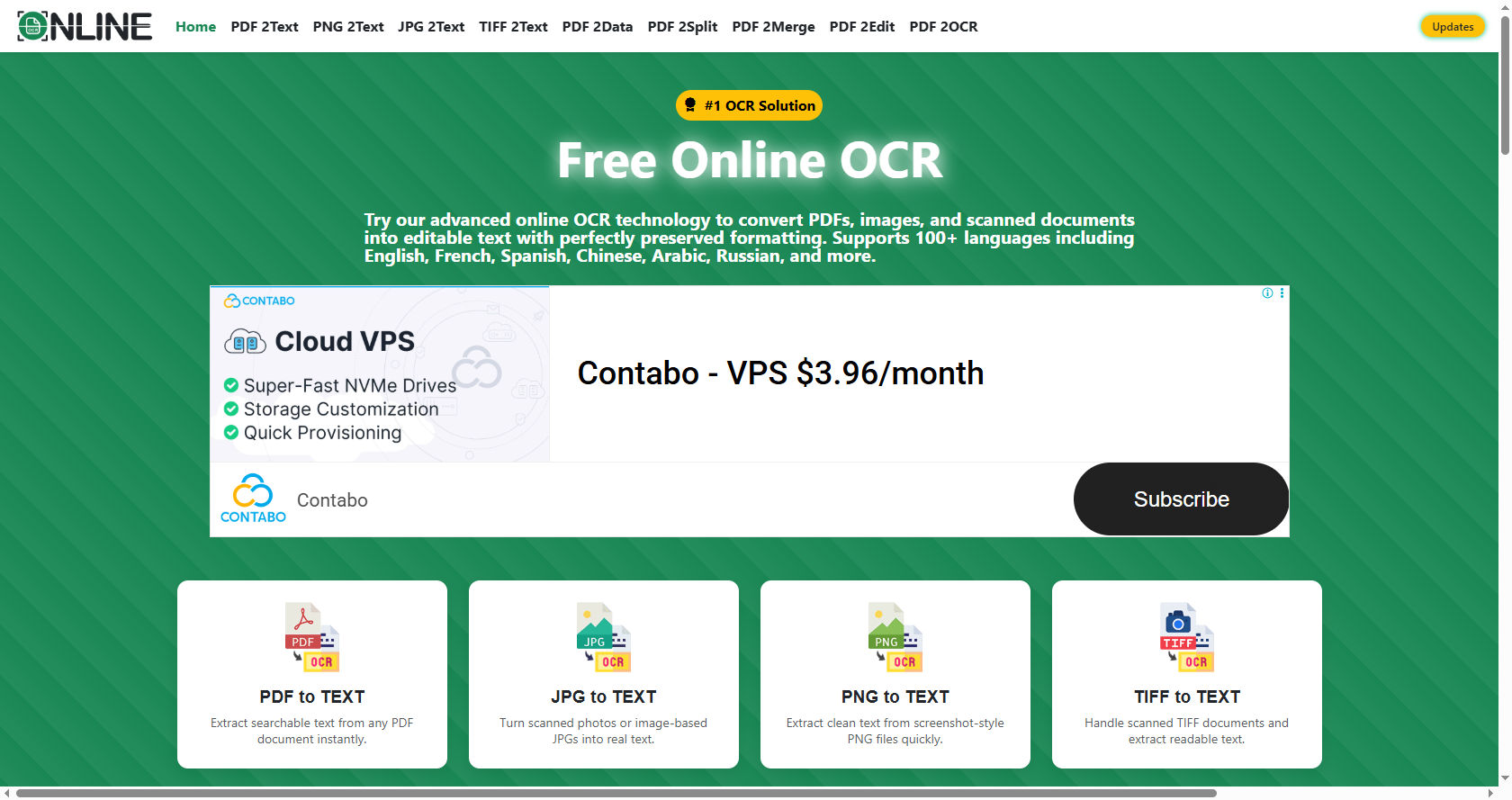
At its core, Online OCR works by scanning text from images, PDFs, or scanned documents and converting it into machine-readable text. Unlike traditional OCR software that requires installation, Online OCR operates directly through a web browser. With Online OCR, users upload their files, and within seconds, they receive editable text that can be copied, saved, or shared.
One of the primary reasons Online OCR is useful is its simplicity. Instead of typing long pages manually, users can rely on Online OCR to extract text quickly and accurately. This convenience saves time, reduces effort, and increases productivity in both academic and professional settings.
Accessibility and Convenience
Online OCR is accessible to anyone with an internet connection. Because Online OCR runs on web platforms, there is no need to install heavy software or worry about system compatibility. This makes it ideal for users who work on different devices such as laptops, tablets, or smartphones.
Students working on school projects can rely on Online OCR to digitize textbook pages or printed notes. Office workers can use Online OCR to extract information from printed contracts or reports. The convenience of accessing Online OCR anytime and anywhere makes it a practical solution for modern needs.
Another major advantage is that Online OCR platforms are usually user-friendly. Most tools require just three simple steps: upload, convert, and download. Even users with basic computer knowledge can operate Online OCR without difficulty.
Accuracy and Speed
Modern Online OCR tools use advanced algorithms and artificial intelligence to recognize characters precisely. As a result, Online OCR can detect different fonts, sizes, and even some handwritten text. Many Online OCR platforms also include automatic formatting features, which preserve paragraphs and spacing.
Speed is another strong point. Within seconds, Online OCR converts scanned pages into editable documents. This speed makes Online OCR ideal for urgent tasks, such as preparing assignments, submitting reports, or processing paperwork in offices.
Because of continuous technological improvements, Online OCR accuracy continues to improve each year. While minor errors may occur, most tools deliver highly reliable results that require minimal editing.
Cost-Effectiveness
Another reason Online OCR stands out is affordability. Free Online OCR services remove the need to purchase expensive desktop software. For startups, students, and small organizations, Online OCR delivers powerful functionality without financial pressure.
Paid versions may offer extra features, but many free Online OCR tools provide enough capabilities for everyday use. This cost-effectiveness encourages wider adoption across schools, libraries, and businesses.
By offering essential document conversion at no cost, Online OCR makes digital transformation accessible to everyone, not just large corporations.
Time Efficiency in Daily Tasks
Time is valuable in today’s fast-paced world, and Online OCR excels at saving it. Manually typing a ten-page document can take hours. In contrast, Online OCR can complete the same task in moments.
This speed is especially useful for teachers grading assignments, journalists collecting information, or researchers analyzing printed sources. Because Online OCR reduces repetitive typing, users can focus on more important and creative work.
The time saved through Online OCR directly increases productivity. Instead of spending energy on data entry, individuals can use their skills for analysis, planning, and decision-making.
Supporting a Paperless Environment
Online OCR supports environmental sustainability by promoting paperless workflows. By turning printed documents into digital files, Online OCR reduces the need for physical storage and printing.
Schools and offices use Online OCR to digitize archives and store them securely in cloud systems. This not only saves space but also protects documents from physical damage.
As more institutions aim to reduce paper waste, Online OCR becomes an important tool in achieving eco-friendly goals.
Usefulness for Students
Students often use Online OCR to extract text from textbooks, worksheets, or library books. With Online OCR, they can quickly copy information into study notes or presentations.
In addition, Online OCR helps students with research projects. Instead of retyping printed references, they can convert them into editable text for easier citation and editing.
Online OCR also supports students with learning challenges. By converting printed material into digital text, it allows the use of text-to-speech tools, making studying more accessible and inclusive.
Business and Office Applications
Businesses rely on Online OCR to process invoices, receipts, and contracts efficiently. Instead of storing piles of paperwork, Online OCR converts documents into searchable digital files.
Many companies integrate Online OCR into their document management systems. This integration helps automate workflows, reduce errors, and improve record-keeping.
In finance departments, Online OCR speeds up data entry. In legal offices, it simplifies document review. Across industries, Online OCR plays a key role in improving efficiency.
Role in Healthcare and Administration
In healthcare, Online OCR plays an important role in managing patient records. Doctors and staff use Online OCR to digitize prescriptions, reports, and handwritten notes.
By automating record conversion, Online OCR improves accuracy and reduces administrative workload. This allows healthcare professionals to focus more on patient care rather than paperwork.
Administrative offices in government and education sectors also benefit from Online OCR. Digitizing forms and applications makes retrieval and storage easier and faster.
Multilingual Capabilities
A powerful feature of Online OCR is its ability to recognize multiple languages. Advanced Online OCR systems recognize text in English, Spanish, French, and many other languages.
This capability makes Online OCR valuable for international businesses and students studying foreign languages. Users can upload documents in different languages and convert them into editable text without difficulty.
Multilingual support expands the usefulness of Online OCR beyond borders, making it a global solution.
Mobile Compatibility and Flexibility
Mobile compatibility increases the value of Online OCR significantly. Many Online OCR services offer mobile-friendly websites or apps.
With mobile Online OCR, users can take a photo of a document and convert it instantly. This is helpful for travelers, field workers, and students who need quick access to text.
The flexibility of Online OCR ensures that document conversion is no longer limited to office desks. It can happen anywhere, at any time.
Security and Data Protection
Security is an important concern when uploading documents online. Reputable Online OCR providers use encryption and secure servers to protect user data.
When choosing Online OCR, users should check privacy policies and ensure their files are not stored permanently. Free Online OCR platforms often delete files automatically after processing.
Understanding security features helps users feel confident when using Online OCR for sensitive documents.
Integration with Other Tools
Another advantage of Online OCR is its compatibility with other software tools. Developers can connect Online OCR with cloud storage platforms, editing tools, and workflow systems.
This flexibility allows Online OCR to become part of larger digital processes. For example, scanned invoices can be converted and automatically saved into accounting software.
The ability to integrate Online OCR into different systems increases efficiency and simplifies complex tasks.
Limitations to Consider
While Online OCR is powerful, it is not perfect. Users should understand that Online OCR may struggle with unclear images, unusual fonts, or messy handwriting.
Even so, Online OCR continues to improve as technology advances. Most errors can be corrected quickly through minor editing.
Being aware of these limitations helps users set realistic expectations and use Online OCR effectively.
The Future of Online OCR
The future of Online OCR looks promising as artificial intelligence continues to evolve. Artificial intelligence will make Online OCR even more accurate and capable of understanding context.
As innovation continues, Online OCR could include smarter formatting, better handwriting recognition, and real-time translation features.
These advancements will further increase the usefulness of Online OCR in education, business, healthcare, and everyday life.
Conclusion
In conclusion, Online OCR has proven to be an essential tool in the modern digital world. It bridges the gap between printed documents and digital text, making information easier to access, edit, and share.
From students to professionals, Online OCR provides convenience, speed, and affordability. By saving time, reducing manual work, and supporting paperless practices, Online OCR empowers users to work smarter.
Its accessibility across devices, multilingual support, and integration capabilities make it suitable for a wide range of applications. Whether used for academic research, business documentation, or healthcare administration, Online OCR enhances productivity and simplifies document management.
Although minor limitations exist, continuous improvements in technology ensure that Online OCR will only become more reliable and powerful. As technology evolves, Online OCR will remain a valuable resource for individuals and organizations seeking efficient digital solutions.
Ultimately, what makes Online OCR useful is its ability to transform complex, time-consuming tasks into simple and manageable processes. It represents the future of document handling—fast, accurate, and accessible to all.